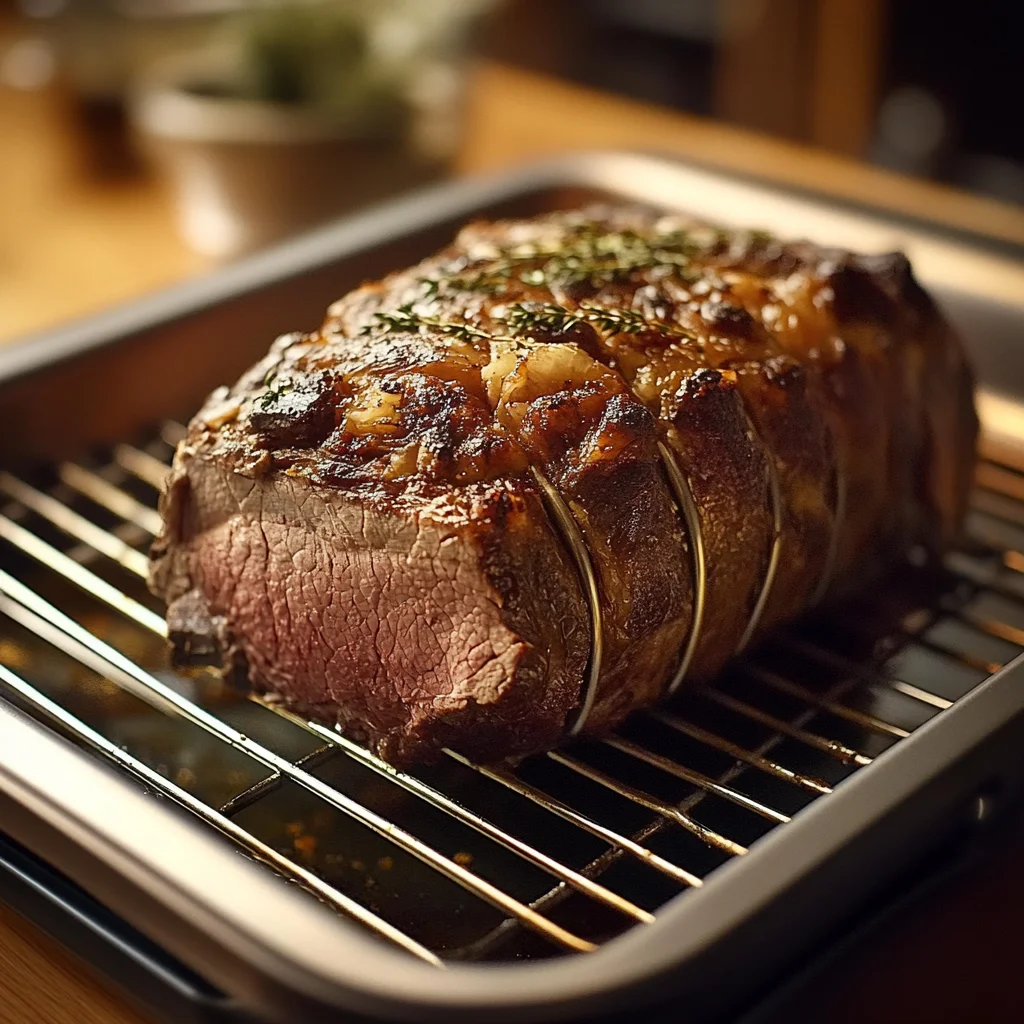
Are you ready to elevate your dining experience with a mouthwatering Prime Rib Roast cooked to perfection in your oven? This classic dish is the epitome of culinary excellence, embodying rich flavors, tender meat, and a beautiful presentation that will wow your guests. Whether it’s a special occasion or a cozy family dinner, a Prime Rib Roast is sure to impress. In this guide, you’ll learn everything you need to know about preparing a succulent Prime Rib Roast in the oven, including tips, tricks, and even variations to suit your taste.
Why You’ll Love This Recipe
There are countless reasons to fall in love with this Prime Rib Roast recipe. First and foremost, the flavor! The combination of garlic, fresh herbs, and Dijon mustard creates a savory crust that enhances the natural richness of the beef. The aroma that fills your kitchen as it roasts is simply irresistible, making it a sensory delight.
Another reason to cherish this recipe is its versatility. You can customize the herbs and spices based on your preferences. Want a bit of heat? Add some crushed red pepper. Prefer a sweeter profile? Consider a touch of brown sugar in the rub. The options are as endless as your imagination. Plus, this dish is perfect for any occasion—be it a holiday feast, a dinner party, or a Sunday family meal.
Not only is the Prime Rib Roast a showstopper on the table, but it’s also a relatively straightforward dish to prepare. With just a bit of prep work and the right cooking techniques, you’ll have a masterpiece that looks and tastes like it came from a five-star restaurant. It’s truly a dish that’s worth the time and effort, making it a rewarding experience for both the cook and the guests.
Finally, the leftovers (if there are any) are another bonus! Prime Rib Roast can be transformed into delicious sandwiches, salads, or even stir-fries. It offers great value for your time and investment, making it a worthy addition to your recipe repertoire.
Why You Should Try This Recipe
If you’ve ever been intimidated by the thought of cooking a Prime Rib Roast, let this recipe alleviate your concerns. This guide breaks down the process into simple, manageable steps, ensuring success even for novice cooks. The detailed instructions will walk you through each stage, from seasoning to resting, highlighting important tips that guarantee a juicy and flavorful roast.
The appeal of a Prime Rib Roast extends beyond its taste and presentation. It’s a meal that brings people together, creating lasting memories around the dinner table. Imagine the smiles and compliments you’ll receive as you serve this stunning roast to family and friends. It’s an experience that fosters connection and celebration, and there’s nothing quite like it.
Moreover, cooking a Prime Rib Roast in the oven allows for even cooking and the development of a beautiful crust, which is essential for enhancing flavor. The high initial temperature sears the outside, locking in moisture, while the lower temperature allows for slow and even cooking. This method is tried and true, making it a reliable option for anyone looking to impress.
Finally, this recipe is adaptable to your dietary needs. You can easily adjust the herbs and spices, or even incorporate different sides to create a balanced meal. Whether you’re following a specific diet or simply cater to various tastes, this Prime Rib Roast can be part of your culinary journey.
Ingredients and Utensils Needed
Ingredients
- 1 (5-7 pound) prime rib roast, bone-in
- 2 tablespoons olive oil
- 4 cloves garlic, minced
- 2 tablespoons fresh rosemary, chopped
- 2 tablespoons fresh thyme, chopped
- 2 tablespoons kosher salt
- 1 tablespoon black pepper
- 1 tablespoon Dijon mustard
- 1 cup beef broth
Utensils
- Roasting pan with rack
- Meat thermometer
- Small mixing bowl
- Whisk or spoon for mixing
- Aluminum foil
- Carving knife
- Cutting board
- Strainer for au jus
Having the right ingredients and tools at your disposal ensures a smooth cooking process and helps you achieve the best results. The prime rib roast is the star of the show, but the herbs and seasonings enhance its flavor profile. Investing in a good quality meat thermometer is key to achieving your desired doneness, while a sturdy roasting pan allows for even cooking and easy cleanup. Be sure to have all your utensils ready before you begin, making the preparation process more manageable and enjoyable.
Detailed Recipe Steps
Now that you have all your ingredients and tools in place, it’s time to dive into the cooking process. Follow these detailed steps to create a Prime Rib Roast that’s sure to impress.
- Preheat the Oven: Begin by preheating your oven to 450°F (232°C). This high temperature is crucial for creating that beautiful crust on the roast.
- Make the Herb Paste: In a small mixing bowl, combine the olive oil, minced garlic, chopped rosemary, chopped thyme, kosher salt, black pepper, and Dijon mustard. Mix well to create a fragrant paste. This herb mixture is essential for flavoring the roast.
- Prepare the Roast: Pat the prime rib roast dry with paper towels to remove excess moisture. This step is important for achieving a good sear. Once dry, rub the herb paste evenly over the entire surface of the roast, ensuring every crevice is covered for maximum flavor.
- Position the Roast: Place the seasoned roast on a rack in a roasting pan, bone side down. The rack allows air to circulate around the meat, ensuring even cooking and browning.
- Roast at High Temperature: Place the roasting pan in the preheated oven and roast for 20 minutes. This initial high temperature will help form a crust on the outside of the meat, sealing in the juices.
- Reduce the Temperature: After 20 minutes, lower the oven temperature to 325°F (163°C). Continue roasting for an additional 1.5 to 2 hours, depending on the size of the roast and your desired level of doneness. Use a meat thermometer to check for an internal temperature of 130°F (54°C) for medium-rare.
- Rest the Roast: Once the roast reaches your desired temperature, remove it from the oven and transfer it to a cutting board. Tent the roast loosely with aluminum foil and let it rest for 20-30 minutes. Resting allows the juices to redistribute throughout the meat, resulting in a juicier roast.
- Prepare the Au Jus: While the roast is resting, pour the beef broth into the roasting pan, scraping up any browned bits from the bottom. This will add flavor to your au jus. Strain the liquid into a serving dish to remove any solids, and keep warm.
- Slice and Serve: After resting, use a sharp carving knife to slice the roast against the grain into thick slices. Serve with the au jus on the side, and enjoy your delicious Prime Rib Roast with your choice of sides.
Throughout this process, remember that patience is key. Allowing the roast to rest is just as important as the cooking itself, as it enhances the overall flavor and texture of the meat. Additionally, using a meat thermometer is essential for accuracy—this tool will prevent overcooking and ensure you achieve the perfect doneness.
Tips and Variations
As you become more comfortable with cooking a Prime Rib Roast, consider experimenting with different flavors and techniques. Here are some tips and variations to enhance your experience:
- Herb Variations: If rosemary and thyme aren’t your favorite, try using herbs like oregano or sage. You could also add a bit of fresh parsley for a burst of color and flavor.
- Spice It Up: If you enjoy a little heat, consider adding crushed red pepper flakes or cayenne pepper to the herb paste. This will give your roast a subtle kick.
- Make It Sweet: For a sweeter profile, add a tablespoon of brown sugar or honey to the herb paste. This will caramelize during roasting and create a nice contrast to the savory flavors.
- Alternative Cooking Methods: If you have a smoker or a grill, consider cooking your Prime Rib Roast using these methods for a unique flavor profile. Just be sure to monitor the temperature closely.
- Leftover Ideas: Repurpose any leftovers by making delicious sandwiches, adding them to salads, or incorporating them into a pasta dish. The possibilities are endless!
Avoid common mistakes by ensuring you don’t rush the resting period. This is a crucial step that can make or break your roast. Additionally, always use a quality meat thermometer to ensure accurate cooking.
Nutritional Values and Benefits
Understanding the nutritional profile of your Prime Rib Roast can help you enjoy it as part of a balanced diet. Here’s a basic breakdown:
- Calories: Approximately 300-400 calories per serving (based on a 3-ounce serving size)
- Protein: 25-30 grams
- Fat: 20-25 grams (with variations based on the cut)
- Carbohydrates: 0 grams
Prime rib is an excellent source of high-quality protein, which is essential for muscle repair and growth. Additionally, it provides key nutrients such as iron, zinc, and B vitamins, all of which contribute to overall health. The fats present in prime rib are primarily saturated, so moderation is key. However, when enjoyed occasionally as part of a varied diet, it can be a satisfying and nutrient-rich meal.
Incorporate some healthy sides like roasted vegetables or a fresh salad to create a more balanced meal. This will not only enhance flavors but also provide additional nutrients and fiber.
Frequently Asked Questions
What is the best temperature to cook a Prime Rib Roast Oven?
The best method is to start at a high temperature of 450°F (232°C) for the first 20 minutes to create a crust, then reduce to 325°F (163°C) for the remainder of the cooking time.
How long should I let my Prime Rib Roast rest?
It is recommended to let your Prime Rib Roast rest for 20-30 minutes after cooking. This allows the juices to redistribute for a more tender and juicy roast.
How do I know when my Prime Rib Roast is done?
Using a meat thermometer, check the internal temperature. For medium-rare, aim for 130°F (54°C). For medium, aim for 140°F (60°C).
Can I cook Prime Rib Roast in a slow cooker?
Yes, you can cook a Prime Rib Roast in a slow cooker, but it will not achieve the same crust as oven roasting. Searing the meat first and then transferring it to the slow cooker can help enhance flavor.
What are some good side dishes for Prime Rib Roast?
Great side dishes include roasted vegetables, creamy mashed potatoes, or a fresh salad. Consider serving with a rich au jus for dipping!
Conclusion
In summary, the Prime Rib Roast Oven recipe offers an incredible way to create a stunning and delicious centerpiece for any gathering. With the right ingredients, tools, and steps, you can achieve a mouthwatering roast that is sure to impress. Don’t forget to experiment with different flavors and adapt the recipe to your preferences. For more delicious recipes, check out Delicious High Protein Greek Pasta Salad or Irresistible Mediterranean Pasta Salad for treats you will love! Enjoy your cooking adventure, and happy feasting!
For more inspiration, be sure to visit our Pinterest page at Seemore Recipes Blog.
Prime Rib Roast Oven
Ingredients
Equipment
Method
- Step 1: Preheat the Oven to 450°F (232°C).
- Step 2: In a small mixing bowl, combine olive oil, minced garlic, chopped rosemary, chopped thyme, kosher salt, black pepper, and Dijon mustard to create a fragrant herb paste.
- Step 3: Pat the prime rib roast dry with paper towels and rub the herb paste evenly over the roast.
- Step 4: Place the seasoned roast on a rack in a roasting pan, bone side down.
- Step 5: Roast at 450°F for 20 minutes.
- Step 6: Reduce the oven temperature to 325°F (163°C) and continue roasting for 1.5 to 2 hours.
- Step 7: Once the roast reaches your desired temperature, remove it from the oven and let it rest for 20-30 minutes.
- Step 8: Pour beef broth into the roasting pan to prepare the au jus.
- Step 9: Slice the roast against the grain and serve with au jus on the side.