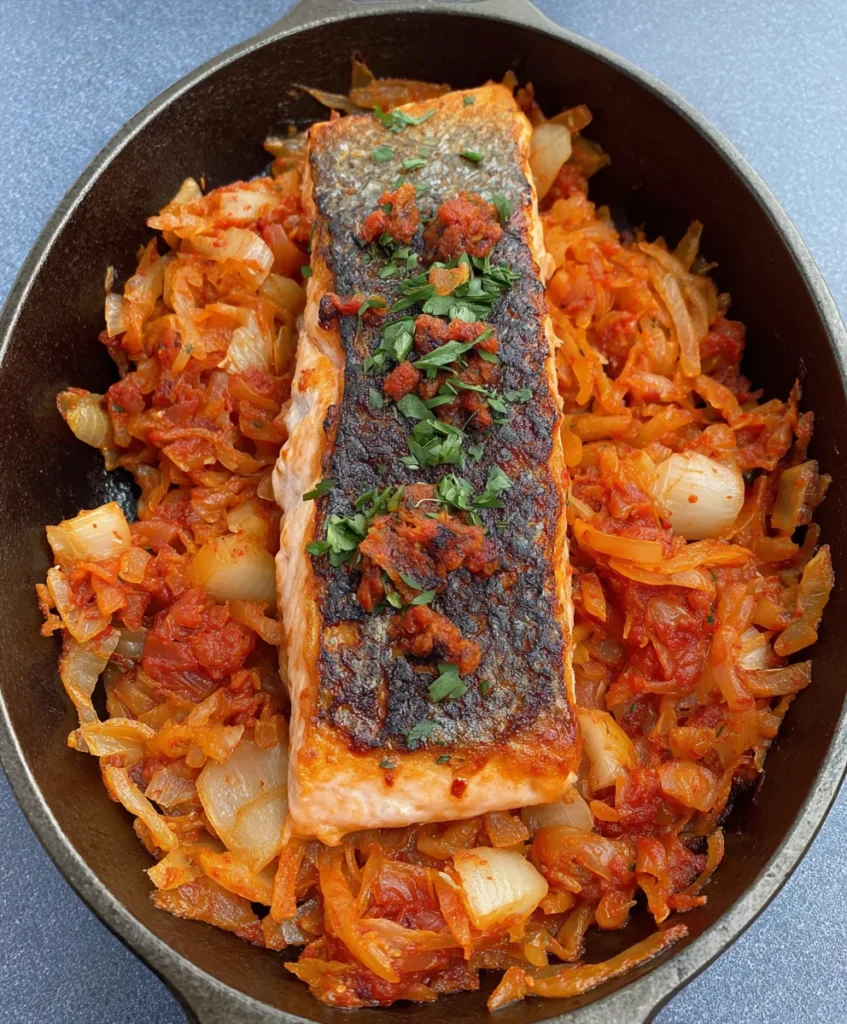
If you’re looking to spice up your dinner table with a dish that combines health benefits, flavor, and ease of preparation, look no further than kimchi baked salmon. This delightful recipe marries the rich, buttery taste of salmon with the zesty, fermented crunch of kimchi, creating a meal that’s not only delicious but also packed with nutrients. With just a few ingredients and minimal prep time, you can have a gourmet meal ready in under 30 minutes. This dish is perfect for busy weeknights or impressing guests at a dinner party, making it a versatile addition to your culinary repertoire.
Why You’ll Love This Recipe
There are countless reasons to fall in love with kimchi baked salmon. First and foremost, the flavor profile is simply irresistible. The umami-rich salmon pairs beautifully with the tangy, spicy notes of kimchi, creating a harmonious balance that will tantalize your taste buds. The addition of gochujang, a Korean chili paste, adds an extra layer of depth and heat, making each bite a flavor explosion.
Not only is this dish delicious, but it’s also incredibly healthy. Salmon is a fantastic source of omega-3 fatty acids, which are known to support heart health and reduce inflammation. Kimchi, a staple of Korean cuisine, is packed with probiotics that benefit gut health and boost the immune system. Together, they create a well-rounded meal that nourishes both body and soul.
Moreover, the preparation is a breeze. With minimal ingredients and straightforward steps, even novice cooks can master this recipe. You can prepare the kimchi mixture while the oven preheats, and by the time you’ve assembled everything on a baking sheet, your oven is ready to work its magic. Plus, it’s a one-pan meal, meaning less cleanup for you!
Finally, kimchi baked salmon is versatile. You can serve it with steamed rice, quinoa, or even a fresh salad, depending on your dietary preferences or what you have on hand. It’s a dish that invites creativity in the kitchen, allowing you to swap out ingredients or adjust the spice levels to suit your tastes.
Why You Should Try This Recipe
Trying out new recipes can be a thrilling culinary adventure, and kimchi baked salmon is no exception. For those who enjoy experimenting with flavors, this recipe offers an exciting fusion of Korean and Western cuisine. The unique combination of ingredients introduces a delightful twist to traditional salmon dishes, making it a conversation starter at any dinner table.
Additionally, if you’re someone who enjoys meal prep, this dish can be made in larger batches and stored for quick lunches or dinners throughout the week. The flavors actually deepen overnight, making it a fantastic option for next-day meals. Simply reheat and enjoy!
For those who are health-conscious, this recipe is a dream come true. The use of natural ingredients like honey or maple syrup to balance the spice from the gochujang keeps the dish wholesome without sacrificing flavor. It’s a dish you can feel good about serving to your family or guests, knowing it’s both nutritious and satisfying.
Furthermore, if you’re curious about exploring Korean cuisine or simply want to add a new favorite to your repertoire, this recipe is a great introduction. Kimchi is increasingly popular in various culinary circles, and mastering a dish that features it prominently can open the door to more adventurous cooking.
Ingredients and Utensils Needed
Ingredients
- 4 salmon fillets – Fresh or frozen, ensure they are skin-on for the best flavor and texture.
- 1 cup kimchi, chopped – Use store-bought or homemade for optimal taste.
- 2 tablespoons gochujang (Korean chili paste) – Adds heat and depth; adjust to taste.
- 1 tablespoon soy sauce – Use low-sodium for a healthier option.
- 1 tablespoon sesame oil – Helps to enhance flavor and adds richness.
- 2 teaspoons honey or maple syrup – Balances the heat; feel free to adjust sweetness.
- 2 green onions, sliced – For garnish and a fresh crunch.
- 1 tablespoon sesame seeds – Toasted for added flavor and crunch.
- Cooked rice, for serving – Brown or white rice both work well.
- Fresh cilantro, for garnish (optional) – Adds a pop of color and freshness.
Recommended Tools and Utensils
- Baking Sheet – A large one lined with parchment paper or lightly greased.
- Mixing Bowl – For combining the kimchi and sauce ingredients.
- Measuring Spoons – For accurate measurement of ingredients.
- Spatula – For spreading the kimchi mixture over the salmon.
- Knife – For chopping the kimchi and slicing green onions.
- Rice Cooker – Optional, but makes cooking rice easier.
- Serving Plates – To present your delicious dish.
Detailed Recipe Steps
Now that you have all your ingredients and tools ready, let’s dive into the step-by-step process of making kimchi baked salmon. Follow these detailed instructions for the best results.
- Preheat your oven to 375°F (190°C). This is an essential first step to ensure your salmon cooks evenly and thoroughly.
- Prepare the kimchi mixture: In a medium bowl, combine the chopped kimchi, gochujang, soy sauce, sesame oil, and honey. Use a spoon to mix well until all ingredients are evenly incorporated. Taste the mixture and adjust the seasoning if necessary.
- Prepare the baking sheet: Line a baking sheet with parchment paper or lightly grease it with cooking spray. This will prevent the salmon from sticking and make for an easier cleanup.
- Arrange the salmon fillets: Place the salmon fillets on the prepared baking sheet, skin-side down. Ensure there is enough space between the fillets for even cooking.
- Top the salmon: Spoon the kimchi mixture evenly over each salmon fillet, ensuring they are well covered. Don’t be shy with the kimchi; it’s the star of the dish!
- Bake the salmon: Place the baking sheet in the preheated oven and bake for about 15-20 minutes. The salmon is done when it flakes easily with a fork and is opaque in the center. Keep an eye on it to avoid overcooking.
- Prepare the rice: While the salmon is baking, prepare the cooked rice according to package instructions. You can use a rice cooker or stovetop method; either works well!
- Garnish the salmon: Once the salmon is done baking, remove it from the oven. Sprinkle the fillets with sliced green onions and sesame seeds for garnish. This adds a lovely crunch and a burst of color.
- Serve: Plate the kimchi baked salmon hot over a bed of cooked rice. For an extra touch, garnish with fresh cilantro if desired. Enjoy your meal!
Tips and Variations
Experimenting with a recipe is part of the fun! Here are some tips and variations to consider for your kimchi baked salmon.
Alternative Ingredients
- For a vegan option: Substitute the salmon with firm tofu or tempeh. Pre-marinate it in the kimchi mixture before baking for added flavor.
- Gluten-free: Ensure the soy sauce used is gluten-free, or replace it with tamari.
- Different proteins: Try using other types of fish, such as trout or cod, for a different flavor profile.
Avoid Common Mistakes
- Don’t overbake: Salmon can dry out quickly. Always check for doneness around the 15-minute mark.
- Freshness matters: Use fresh kimchi for the best flavor and probiotic benefits.
- Adjust spice levels: If you’re not a fan of heat, reduce the amount of gochujang or opt for a milder chili paste.
Nutritional Values and Benefits
Each serving of kimchi baked salmon is not only delicious but also nutritious. Here’s a breakdown of the approximate nutritional values per serving:
- Calories: 320
- Protein: 30g
- Fat: 18g
- Carbohydrates: 12g
- Fiber: 2g
- Sugar: 4g
- Sodium: 600mg
The key benefits include:
- Omega-3 fatty acids: Promotes heart health and reduces inflammation.
- Probiotics from kimchi: Supports gut health and boosts the immune system.
- Low in carbohydrates: Makes it a suitable option for low-carb diets.
Frequently Asked Questions
What can I serve with kimchi baked salmon?
You can serve kimchi baked salmon over a bed of rice, quinoa, or alongside steamed vegetables. It also pairs well with a fresh salad for a lighter meal.
Can I use frozen salmon for this recipe?
Yes, you can use frozen salmon. Just ensure it is fully thawed before baking for even cooking.
How do I store leftovers of kimchi baked salmon?
Store leftovers in an airtight container in the refrigerator for up to 3 days. Reheat gently in the oven or microwave.
Can I make this recipe spicy?
Absolutely! You can increase the amount of gochujang in the kimchi mixture or add some sliced fresh chili peppers for an extra kick.
Is kimchi baked salmon healthy?
Yes, kimchi baked salmon is a healthy choice. It is rich in omega-3 fatty acids, low in carbohydrates, and packed with probiotics from the kimchi, making it a nutritious meal option.
Conclusion
In conclusion, kimchi baked salmon is a must-try recipe that combines health, flavor, and simplicity. With easy-to-follow steps and a handful of wholesome ingredients, you can create a dish that’s both satisfying and nourishing. Whether you’re looking for a quick weeknight dinner or a dish to impress your guests, this recipe delivers on all fronts. Don’t hesitate to share your thoughts in the comments below, and if you loved the recipe, please spread the word! Also, check out additional delicious recipes on our blog like Naan or Strawberry Semifreddo for more culinary inspiration.
For more delicious ideas, visit our Pinterest page!
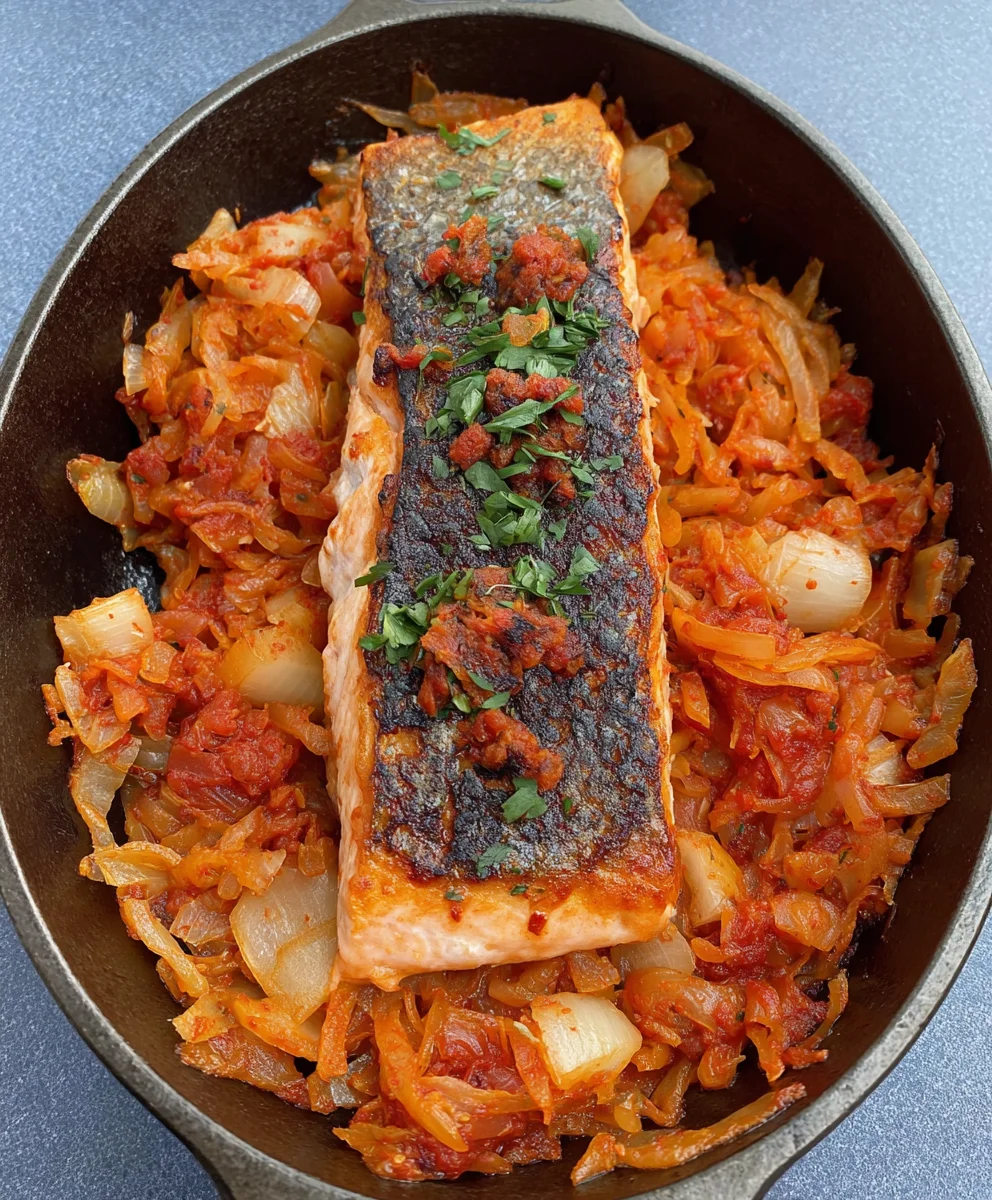
Kimchi Baked Salmon
Ingredients
Equipment
Method
- Preheat your oven to 375°F (190°C).
- In a medium bowl, combine the chopped kimchi, gochujang, soy sauce, sesame oil, and honey. Mix well until all ingredients are evenly incorporated.
- Line a baking sheet with parchment paper or lightly grease it with cooking spray.
- Place the salmon fillets on the prepared baking sheet, skin-side down.
- Spoon the kimchi mixture evenly over each salmon fillet, ensuring they are well covered.
- Bake the salmon in the preheated oven for about 15-20 minutes, or until the salmon flakes easily with a fork and is cooked through.
- While the salmon is baking, prepare the cooked rice according to package instructions.
- Once the salmon is done, remove it from the oven. Sprinkle with sliced green onions and sesame seeds for garnish.
- Serve the kimchi baked salmon hot over a bed of cooked rice. Garnish with fresh cilantro if desired.